We are bound by His oath when we accept by faith what He has done. The strength of the oath is His grace. Grace ties the oath tight; grace is not a tier of loose knots.
Douglas Wilson
Monday, 19 March 2012


Sunday, 18 March 2012
Qualifying inerrancy
I have read a few blog posts on inerrancy over the years. I think the discussion lacks clarity at times. I have previously given my perspective on the difference between inerrancy and infallibility (as it is now used). I do not think inerrancy is a modern idea, even if the term is more recent. "Inspired" is a difficult term because of the differences people place on the idea. I think a good argument can be made for Jesus' view of Scripture being similar to an inerrant view of Scripture.
One complaint is that inerrantists are basically infallibilists once qualifications are taken into account. If one agrees with the qualifications then the term "inerrantist" is still to be preferred as holding inerrancy with qualifications is still significantly distinct from infallibility.
Another complaint is that the presence of qualifications concerning what inerrancy means undermines the term inerrancy. I strongly disagree, and may address some of these qualifications and the reasons for them in further posts. But briefly...
It is claimed that definitions can die a death from a thousand qualifications. This can be true, but it need not be true. The problem here not uncertainty over what the specific view (inerrancy) intends, it is because critics of the view raise complaints. It is often easier to critique something than it is to answer the critique, and frequently the answer is much longer.
Anyone can make an outlandish claim in a few words. Further they can defend such a claim with brief outlandish reasons. Offering a refutation more substantial than stating a contrary position, i.e. giving an explanation, is going to take more words.
Therefore the appropriateness of qualifications does not relate to their number (which is limited to the imagination of the critic) or their length, it relates to their reasonableness.
The Chicago Statement on Biblical Inerrancy is one position on inerrancy; one that I think is moderately reasonable. Hopefully I will address some of the articles in the future.
Here is the Preface The Chicago Statement on Biblical Inerrancy
One complaint is that inerrantists are basically infallibilists once qualifications are taken into account. If one agrees with the qualifications then the term "inerrantist" is still to be preferred as holding inerrancy with qualifications is still significantly distinct from infallibility.
Another complaint is that the presence of qualifications concerning what inerrancy means undermines the term inerrancy. I strongly disagree, and may address some of these qualifications and the reasons for them in further posts. But briefly...
It is claimed that definitions can die a death from a thousand qualifications. This can be true, but it need not be true. The problem here not uncertainty over what the specific view (inerrancy) intends, it is because critics of the view raise complaints. It is often easier to critique something than it is to answer the critique, and frequently the answer is much longer.
Anyone can make an outlandish claim in a few words. Further they can defend such a claim with brief outlandish reasons. Offering a refutation more substantial than stating a contrary position, i.e. giving an explanation, is going to take more words.
Therefore the appropriateness of qualifications does not relate to their number (which is limited to the imagination of the critic) or their length, it relates to their reasonableness.
The Chicago Statement on Biblical Inerrancy is one position on inerrancy; one that I think is moderately reasonable. Hopefully I will address some of the articles in the future.
Here is the Preface The Chicago Statement on Biblical Inerrancy
Saturday, 17 March 2012
On reading Scriptural passages repeatedly
I have come across this advice several times, and while it may be of some use to some people, I would like to register my dissension.
I believe I first came across this concept from John MacArthur, though cannot remember the context. But he either recommended it or stated that he himself did this; or, quite possibly, both did and recommended reading thru a passage of Scripture multiple times. The rationale of such an exercise was perhaps to commit it to memory, or to better understand the passage in question.
I have since come upon this recommendation several times. Jamsco suggested it, Justin Taylor and Joe Carter referenced it. These go back to a suggestion by James Gray in his 1904 book, How to master the English Bible.
Variants on number of times thru a book are 30 times, 20 times, as many times as needed to master the book.
So I have given this a go. When I first came across the idea I tried James, though not certain if I managed to get thru the full 30 readings. I have also tried it with Jude, Ephesians, and the Sermon on the Mount, Matthew 5-7; getting thru each book or passage at least 20 times.
My conclusion, this method is overrated. It may work for some people. If it does, continue. And reading thru more than once has some benefits, not the least being an overview of the book which is sometimes less appreciated when we focus on smaller passages of Scripture. Focused exegesis mindful of a larger context is very useful. But I have not found the reading of a passage multiple times to add significant insight in the 18th or 19th reading. Frankly, 5 times is probably plenty. I think it would be more useful to read the book a few times then come back at a later stage when you have delved into several other books.
I am not saying this is a bad practice, or that it won't work for you. Rather this is to temper others' enthusiasm that you will obtain awesome insights on the 20th reading that you missed on the previous 19.
I believe I first came across this concept from John MacArthur, though cannot remember the context. But he either recommended it or stated that he himself did this; or, quite possibly, both did and recommended reading thru a passage of Scripture multiple times. The rationale of such an exercise was perhaps to commit it to memory, or to better understand the passage in question.
I have since come upon this recommendation several times. Jamsco suggested it, Justin Taylor and Joe Carter referenced it. These go back to a suggestion by James Gray in his 1904 book, How to master the English Bible.
Variants on number of times thru a book are 30 times, 20 times, as many times as needed to master the book.
So I have given this a go. When I first came across the idea I tried James, though not certain if I managed to get thru the full 30 readings. I have also tried it with Jude, Ephesians, and the Sermon on the Mount, Matthew 5-7; getting thru each book or passage at least 20 times.
My conclusion, this method is overrated. It may work for some people. If it does, continue. And reading thru more than once has some benefits, not the least being an overview of the book which is sometimes less appreciated when we focus on smaller passages of Scripture. Focused exegesis mindful of a larger context is very useful. But I have not found the reading of a passage multiple times to add significant insight in the 18th or 19th reading. Frankly, 5 times is probably plenty. I think it would be more useful to read the book a few times then come back at a later stage when you have delved into several other books.
I am not saying this is a bad practice, or that it won't work for you. Rather this is to temper others' enthusiasm that you will obtain awesome insights on the 20th reading that you missed on the previous 19.
Tuesday, 13 March 2012
Blogging from 4000 feet
I have wanted to do this for a while; writing a post while flying. I am writing from my smart phone as I didn't need my laptop today. There are no issues using a phone in flight as it is a chartered flight and the phone doesn't interfere with the electronics on some older planes (not so certain it's a problem on the newer ones either?).
Here's a photo of the sunrise over Otago. Will have to insert it later, blogger won't grab pictures off my phone.

Here's a photo of the sunrise over Otago. Will have to insert it later, blogger won't grab pictures off my phone.

Monday, 12 March 2012
Monday quote
What we must have—whatever else we have—is God's forgiveness, or we have nothing.
Don Carson, The God Who Is There.
Don Carson, The God Who Is There.
Monday, 5 March 2012
Monday quote
There is no neutral ground in the universe. Every square inch, every split second is claimed by God, and counterclaimed by Satan.
C. S. Lewis
C. S. Lewis
Sunday, 4 March 2012
Possibly the earliest manuscript from the New Testament
An early fragment of New Testament has been found. This was hinted at a month ago and further details have become available.
This fragment of Mark is one of 6 manuscripts from the Bible found in this Egyptian discovery. Also found were fragments of Luke and 4 Pauline epistles.
The Mark fragment is "a very small fragment, not too many verses, but it's definitely from Mark," Wallace said. "... To have a fragment from one of the Gospels that's written during the lifetime of some of the eyewitnesses to the resurrection is just astounding."Previously the earliest fragment was Paparus 52, verses from John, dated 125 AD. This new fragment was
To date, the earliest-known fragment of the New Testament is from John's Gospel and dates from around 125 A.D.
The Mark fragment, Wallace said, will affirm what is already written in that portion of Mark's Gospel.
The paleographer who dated it, Wallace said, is "one of the world's leading paleographers." Wallace previously said the paleographer is certain it's from the first century. Still, Wallace told Hewitt, several more paleographers will look at the Mark fragment before the book is published.
The Mark fragment will be published in a book along with six other manuscripts, Wallace said. One of those will be a second-century sermon on Hebrews 11. The significance: It shows Hebrews -- whose author is unknown -- was accepted early by the church as Scripture.
dated by one of the world’s leading paleographers. He said he was ‘certain’ that it was from the first century. If this is true, it would be the oldest fragment of the New Testament known to exist. Up until now, no one has discovered any first-century manuscripts of the New Testament. The oldest manuscript of the New Testament has been P52, a small fragment from John’s Gospel, dated to the first half of the second century. It was discovered in 1934.
Not only this, but the first-century fragment is from Mark’s Gospel. Before the discovery of this fragment, the oldest manuscript that had Mark in it was P45, from the early third century (c. 200–250 CE). This new fragment would predate that by 100 to 150 years.
 |
| P-52 |
Wednesday, 29 February 2012
Global warming predictions
Here is a good summary of some global warming predictions and their failure. Covered is
I am not certain I completely agree with the sceptical position proposed in the paper; perhaps one may consider me even more sceptical? Nevertheless, the author aligns the global warming predictions with recent temperature data and shows that they do not line up.
- The rise in land based air temperatures;
- The rise in ocean temperatures;
- The tropical atmospheric "hotspot"; and
- Outgoing earth radiation.
I am not certain I completely agree with the sceptical position proposed in the paper; perhaps one may consider me even more sceptical? Nevertheless, the author aligns the global warming predictions with recent temperature data and shows that they do not line up.
 |
| On the left is the data collected by millions of weather balloons. On the right is what the climate models say was happening. The theory is incompatible with the observations. |
Monday, 27 February 2012
Monday quote
What is the ground the Morlocks have chosen to defend? In metaphysics they defend radical materialism; in ontology, nominalism; in politics, collectivism and grievance-mongering race-identity; in economics, socialism, Fabianism, Keynesianism; in ethics, aborticide, suicide, euthanasia, including that form of mass-suicide called multiculturalism; in aesthetics, subjectivism and hatred of the beautiful; and in all things, nihilism, nihilism, nihilism.
John C Wright
John C Wright
Sunday, 26 February 2012
Developing a biblical concept of physical life
In response to my article on the nature of death Jc_Freak asks
I have considered this matter for some time, not all my thoughts included in the post; it seems to me that blood is closely tied to life which is what I was establishing in the post. But because this connection is foundational it is important to maximise certainty before deriving corollaries.
There are arguments around abortion and euthanasia relating to personhood, though personhood may not completely equate to living—animals have the latter, not the former. If the commandments of God (eg. Do not kill) are based on human life—even if the reason for the commandments is the imago Dei—then we need to consider how being alive affects permissible behaviour.
Regarding the first question I am afraid I cannot answer this to any degree of satisfaction. I included the Hebrew words to show which word occurs where, and to emphasise the repetition of the word "blood". I do not read Hebrew so my thoughts are somewhat restricted. I understand about unwarranted expansion of semantic ranges, but I am also cautious about undue restriction based on word use: biblical narrative, and even more so poetry, uses frequent parallelism which relies on the use of synonyms; we should caution against making non-existent distinctions between synonyms.
That said, I understand nephesh to roughly parallel the English "life", or perhaps "soul"? It applies to humans and higher animals, and is related to the concept of breathing. Plants and some creatures classified Animalia are not living in the nephesh sense. So perhaps "soul" is a better translation? We will then need to grant that a cow may have a soul, but in a Hebrew biblical sense, and not necessarily in an English sense? I am uncertain how this relates to chay, though chay as life seems to also contain the meaning (or be metaphorical for) "newness" or "freshness".
First, I have always understood nephesh to mean 'soul', yet you define it here as 'life'. How would you distinguish therefore between the concept of nephesh and the concept of chay?Starting with the second question: What I was trying to do here is laying out some ground work for developing a fully fledged biblical concept of physical life. It may not seem that challenging if such a position happens to coincide with secular definitions—for which we should be grateful—but it is important for us to have the right reasons. A libertarian and drunkard may both decry Prohibition, but they do so from different positions. It may be that the secular arguments around death derive, in part, from our Western Christian heritage, though definitions of life are being challenged by medical ethicists in the literature and abortionettes in the culture war.
Second, you mention that this might have implications on how we view euthanasia, abortion, ect... I don't really see how since we already define death in those terms. Within general culture the cessation of the heart is still the prinicple symbol of the moment of death. Thus, I am not sure how challenging this is. Could you elaborate on how you feel this would alter people's perceptions?
I have considered this matter for some time, not all my thoughts included in the post; it seems to me that blood is closely tied to life which is what I was establishing in the post. But because this connection is foundational it is important to maximise certainty before deriving corollaries.
There are arguments around abortion and euthanasia relating to personhood, though personhood may not completely equate to living—animals have the latter, not the former. If the commandments of God (eg. Do not kill) are based on human life—even if the reason for the commandments is the imago Dei—then we need to consider how being alive affects permissible behaviour.
Regarding the first question I am afraid I cannot answer this to any degree of satisfaction. I included the Hebrew words to show which word occurs where, and to emphasise the repetition of the word "blood". I do not read Hebrew so my thoughts are somewhat restricted. I understand about unwarranted expansion of semantic ranges, but I am also cautious about undue restriction based on word use: biblical narrative, and even more so poetry, uses frequent parallelism which relies on the use of synonyms; we should caution against making non-existent distinctions between synonyms.
That said, I understand nephesh to roughly parallel the English "life", or perhaps "soul"? It applies to humans and higher animals, and is related to the concept of breathing. Plants and some creatures classified Animalia are not living in the nephesh sense. So perhaps "soul" is a better translation? We will then need to grant that a cow may have a soul, but in a Hebrew biblical sense, and not necessarily in an English sense? I am uncertain how this relates to chay, though chay as life seems to also contain the meaning (or be metaphorical for) "newness" or "freshness".
Monday, 20 February 2012
Monday quote
If we acquiesnce uncritically in the world's own self-understanding, we may find ourselves the servants rather of fashion than of God
John Stott, Between Two Worlds.
John Stott, Between Two Worlds.
Saturday, 18 February 2012
Well the Scots did invent whiskey
Monday, 13 February 2012
Sunday, 12 February 2012
Defining death biblically
Modern medicine defines death in several ways. There can be cessation of heart beating, cessation of breathing, or cessation of brain activity. The latter is intended to be defined quite clearly so as to not include people in comas that may potentially wake up.
 Heart death is when the heart stops pumping and electrical activity ceases (asystole, flat-lining). A heart may stop beating but the electrical activity continues. This may occur because the heart cannot pump (pulseless electrical activity) such as when there is no blood (bleeding), or nowhere for the blood to go (clot in the lungs), or no space for the heart to contract (blood around the heart). It may also occur when abnormal electrical activity does not cause heart contraction (ventricular fibrillation). Both these situations very rapidly become asystole if not treated, and frequently even if treated, especially when death is expected.
Cessation of breathing, eg. blocked airway or drowning, leads to a rise in carbon dioxide in the blood and decreasing oxygen. Increased carbon dioxide quickly leads to unconscious and acidification of the blood. The heart stops after a few minutes (unless there is severe hypothermia) for various reasons.
Brain death is defined as no electrical activity of the brain, no brain reflexes, no response to a stimulus. The person cannot breathe independently, and sometimes cannot maintain a heart beat; thus such a definition exist because of advances in medicine allowing prolonged mechanical ventilation.
These definitions of death are somewhat reasonable. Nevertheless we need to consider what Scripture may say to the issue and whether that modifies our thinking around physical death.
The Bible has several references to various organs of the body. Kidneys, intestines, eyes, liver, skin, blood, bone, heart. Several of the occurrences are literal when describing sacrifice: what to do with the kidneys or liver when offering sacrifices to God. Several are metaphorical, though different to the metaphors we use in English. Thus translators may use English metaphors, though some have become English metaphors from the Hebrew via the English Bible.
"Kidney" (kilyah) may represent emotion. Consider Jeremiah 17:10a
me`ah means intestines or other internal organs such as stomach or uterus (also beten). Literally Psalm 22:14 reads:
Another consideration in understanding death is the word breath. Breath (neshama) and breathe (naphach) are used in the creation account.
The association of blood with life in Scripture provides us with material to deduce a biblical definition of death. If we accept that blood represents life, or is life, then the complete loss of blood or the cessation of blood flow is a coherent biblical definition of death. How does this correspond to current medical views? We know that cessation of blood flow is due the heart ceasing its function as a pump. Therefore a medical definition of cardiac death as asystole is equivalent the biblical definition of death. The Bible would also allow the loss of significant blood from bleeding, pulseless electrical activity, and ventricular fibrillation as definitions of death, though without medical intervention these situations very rapidly become asystole.
Biblically, death is the loss of blood flow, that is the non-perfusion of (all) organs with blood, this is usually due to the cessation of cardiac function.
If we were to argue that breath also relates to life, a secondary biblical definition of death is cessation of breathing, which incidentally leads quickly to cessation of blood flow, our primary definition.
Brain death is not primarily a biblical definition of death of itself, other than that it involves lack of ability to breath spontaneously.
This leads to some interesting conclusions. It should influence how we think about sentience and life. It may have implications concerning euthanasia, abortion, organ donation, mechanical ventilation and other supportive therapies.
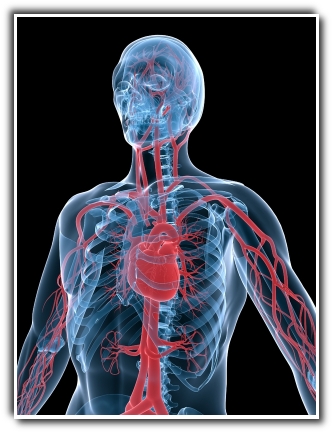 Heart death is when the heart stops pumping and electrical activity ceases (asystole, flat-lining). A heart may stop beating but the electrical activity continues. This may occur because the heart cannot pump (pulseless electrical activity) such as when there is no blood (bleeding), or nowhere for the blood to go (clot in the lungs), or no space for the heart to contract (blood around the heart). It may also occur when abnormal electrical activity does not cause heart contraction (ventricular fibrillation). Both these situations very rapidly become asystole if not treated, and frequently even if treated, especially when death is expected.
Cessation of breathing, eg. blocked airway or drowning, leads to a rise in carbon dioxide in the blood and decreasing oxygen. Increased carbon dioxide quickly leads to unconscious and acidification of the blood. The heart stops after a few minutes (unless there is severe hypothermia) for various reasons.
Brain death is defined as no electrical activity of the brain, no brain reflexes, no response to a stimulus. The person cannot breathe independently, and sometimes cannot maintain a heart beat; thus such a definition exist because of advances in medicine allowing prolonged mechanical ventilation.
These definitions of death are somewhat reasonable. Nevertheless we need to consider what Scripture may say to the issue and whether that modifies our thinking around physical death.
The Bible has several references to various organs of the body. Kidneys, intestines, eyes, liver, skin, blood, bone, heart. Several of the occurrences are literal when describing sacrifice: what to do with the kidneys or liver when offering sacrifices to God. Several are metaphorical, though different to the metaphors we use in English. Thus translators may use English metaphors, though some have become English metaphors from the Hebrew via the English Bible.
"Kidney" (kilyah) may represent emotion. Consider Jeremiah 17:10a
“I the LORD search the heart (leb)"Kidney" appears on the second line, translated "mind" in the ESV and "heart" in the NET. "Heart" (leb, lebab) in the Hebrew apears in the first line. The ESV retains heart whereas in the NET it is translated as "mind". The NET's translation of "heart" as "mind" is not without justification as "heart" often carries the connotation of "will" in Hebrew, whereas it tends to reflect "emotion" in English.
and test the mind (kilyah), (ESV)
I, the Lord, probe into people’s minds (leb).
I examine people’s hearts (kilyah). (NET)
me`ah means intestines or other internal organs such as stomach or uterus (also beten). Literally Psalm 22:14 reads:
I am poured out like water,The relevance of this to our discussion relates to the word "blood". Blood represents life in Hebrew. The question is whether this is primarily metaphorical, or symbolic, or whether blood is perceived as the source of life. "Blood" (dam) occurs over 300 times in the Old Testament. It is clearly used at times when "life" (nephesh) is meant. As such it has a figurative use. Though I am inclined to think that this is because the association with life is meant to be a literal one. After the Flood God instructs Noah concerning food and death:
and all my bones are separated;
my heart is like wax;
it is melted within my intestines (insides);
But you shall not eat flesh with its life (nephesh), that is, its blood (dam). And for your lifeblood (dam nephesh) I will require a reckoning: from every beast I will require it and from man. From his fellow man I will require a reckoning for the life (nephesh) of man.God tells Noah that meat has to be drained of blood because the blood is life. In verse 4 blood is identified with life in a definitional manner:
“Whoever sheds the blood (dam) of man,
by man shall his blood (dam) be shed,
for God made man in his own image. (Genesis 9:4-6)
- Life is blood.
Another consideration in understanding death is the word breath. Breath (neshama) and breathe (naphach) are used in the creation account.
then the LORD God formed the man of dust from the ground and breathed (naphach) into his nostrils the breath (neshama) of life (chay), and the man became a living (chay) creature (nephesh). (Genesis 2:7)Though there is a connection between breath and life here, it does not seem to be as strong. The breath (spirit) of God is required and it is the breath of life, ie the breath that causes life, but it is not definitional. The breath itself is not identified as the life itself (even though it is the source or cause). An argument can be made for an association between breath and life, though I think it less convincing than blood.
The association of blood with life in Scripture provides us with material to deduce a biblical definition of death. If we accept that blood represents life, or is life, then the complete loss of blood or the cessation of blood flow is a coherent biblical definition of death. How does this correspond to current medical views? We know that cessation of blood flow is due the heart ceasing its function as a pump. Therefore a medical definition of cardiac death as asystole is equivalent the biblical definition of death. The Bible would also allow the loss of significant blood from bleeding, pulseless electrical activity, and ventricular fibrillation as definitions of death, though without medical intervention these situations very rapidly become asystole.
Biblically, death is the loss of blood flow, that is the non-perfusion of (all) organs with blood, this is usually due to the cessation of cardiac function.
If we were to argue that breath also relates to life, a secondary biblical definition of death is cessation of breathing, which incidentally leads quickly to cessation of blood flow, our primary definition.
Brain death is not primarily a biblical definition of death of itself, other than that it involves lack of ability to breath spontaneously.
This leads to some interesting conclusions. It should influence how we think about sentience and life. It may have implications concerning euthanasia, abortion, organ donation, mechanical ventilation and other supportive therapies.
Tuesday, 7 February 2012
Masculine Christianity
John Piper says this about masculinity within the church,
When I say masculine Christianity or masculine ministry or Christianity with a masculine feel, here's what I mean: Theology and church and mission are marked by an overarching godly male leadership in the spirit of Christ with an ethos of tender-hearted strength, contrite courage, risk-taking decisiveness, and readiness to sacrifice for the sake of leading and protecting and providing for the community. All of which is possible only through the death and resurrection of Jesus.Here Piper recommends that to have godly leadership that protects and provides for the church the men need to have
- tender-hearted strength
- contrite courage
- risk-taking decisiveness
- readiness to sacrifice
Subscribe to:
Posts (Atom)