Showing posts with label mathematics. Show all posts

Saturday, 16 May 2015

Round and exact numbers in Numbers

There has been some complaint about the census values in Numbers being round numbers. I don't see why this is a problem. A more sophisticated argument against the census is that the Levites were clearly counted to the man. Personally, I find these discrepancies quite interesting as they are the type of thing I notice when reading the Bible but that I encounter less frequently reading criticisms of the Bible.

In his book Why I Believed, Kenneth Daniels makes this case against the passage in Numbers citing several discrepancies ennumerated below. He rightly recognises that the first issue may not be a problem.
  1. The difference between the number of Levites per clan and the the total number of Levites.
  2. The rounding of the number of Levites compared with the precise number of firstborns; something he thinks is mathematically unwarranted.
  3. The self-serving behaviour of the priests in redeeming the excess 273 persons for 5 shekels each.
  4. The discordance between the number of firstborns and the number of mothers.
As a mathematically disposed person I appreciate the issue here. I have noted the difference between accuracy and precision, and get frustrated when data is presented in unwarranted precision. But one must be careful not to let his expectations of how he would do something dictate how something was actually done. Furthermore, there may be important reasons that we are missing by concentrating on what we deem important.

In Numbers 1 God tells Moses to number the Israelites from age 20 upwards (excluding Levi). The total number for each tribe is clearly to the nearest 100. Gad is rounded to the nearest 50. The reason for numbering men aged over 20 may partly be military as these are the men who go to war. Round numbers are adequate for this reason—though exact numbers are permissible. It may be that Gad included a small clan that did not reach 100 men so they would have included a number rounded to the nearest 10. If the number had been, say 47, then this would mean rounding to 0 for that tribe, and adding zero for that clan towards the total number of Israelites; but then that clan would be effectively excluded. A community approach to census allows for a round number, but no clan should be excluded. Thus round numbers are consistent with (but not necessary for) a communal focus.

The Levites are excluded from this count because they are set apart for God. But they are counted, though the focus is on all the Levites so the count is from age 1 month. The count is Gershon: 7500; Kohath: 8600; Merari: 6200; for a total of 22,300. Though the Bible gives the sum as 22,000. This is probably a copyist error as the summation for the other Israelites earlier is correct. Again, the number of Levites is given in round numbers which is acceptable as it was the community of Levites.

The number of firstborn males for all the Israelites was 22,273. These were the males to be redeemed. Redemption of people has an individual component. This is not to discount the importance of community, but biblically there is a sense of individuality associated with redemption.

So the rounded numbers are given in Numbers when communal qualities are in view: warfare and temple (tabernacle) service, but exact numbers are given for individual qualities: redemption.

The redemption of the firstborn meant that God exchanged the firstborn of Israel for all the Levites. It is appropriate to subtract the 2 numbers as the 2 groups are being exchanged. Now if the Levites had been counted to the man then subtracting the 2 numbers would have given a slightly different number, but that is not particularly relevant. What is important is that the rounded number of the Levites was the figure that they had. But as the exchange concerned redemption, one could not say the numbers are approximately the same as that discounts the importance of redeeming every individual. Saying 22,000 is about 22,273 says the numbers are close enough. Saying the excess 273 must pay 5 shekels is saying that every single firstborn male must be redeemed. The amount of money did not matter—it was not that much—but the knowledge that every individual was redeemed to a man was vital.

The amount was 1365 shekels of silver. This is not a large amount. Compare the amount of gold and silver used in building the tabernacle. If the priests were being self-serving why not just ask for a shekel per person on top of the Levite exchange.

Now God did not need to redeem all the firstborn of Israel as that is what the Passover accomplished. However the census occurred in the second month of the second year. In that time there would have been many births. The exact number is uncertain but some rough estimates can be considered. The total number of Israelites males over 20 was about 600,000. Probably a similar number of females of that age and more if we add those who may have gotten married from about 15. Of course older females would have finished having children and many other women already had had a firstborn male. But using the number 600,000 we get a ratio of 1:27 of women giving birth to a firstborn male in the previous 13 months. Or consider the total population. If we have 1.2 million men and women over the age of 20 the total population could exceed 2 million. A high birth-rate of say 50 births per 1000 persons per year would give over 100,000 births per year, over 8000 per month. The number of firstborn males redeemed were those born since the Passover.

Tuesday, 11 September 2012

Fibonacci primes

In the Fibonacci series if the nth term is a prime, then n also is prime (except n = 4).

Fibonacci series
1, 1, 2, 3, 5, 8, 13, 21, 34, 55, 89, 144, 233, 377, 610, 987, 1597, 2584, 4181, 6765, 10946, 17711, 28657, 46368, 75025, 121393, 196418, 317811,...

Primes
2, 3, 5, 7, 11, 13, 17, 19, 23, 29, 31, 37, 41, 43, 47, 53, 59, 61, 67, 71, 73, 79, 83, 89, 97, 101, 103, 107, 109, 113, 127, 131, 137, 139, 149, 151, 157, 163,...

Examples
  • 2 is a prime, it is the 3rd term in the Fibonacci series and 3 is a prime
  • 5 is a prime, 5th in the series and 5 is a prime (trivial)
  • 13 is a prime, 7th in the series and 7 is a prime
  • 89: 11th term
  • 233; 13th term
  • 1597; 17th term

Saturday, 18 August 2012

Order of magnitude

An order of magnitude is a geometric scale increasing or decreasing by the ratio of 10. It is applied to various measurements such as distance, money, or even just numerical value.

The distance to the moon is 400,000 km, to the sun is 150,000,000 km. The ratio between these is 375, thus the sun is more than 2 orders of magnitude (more than 100×) further away from the earth than the moon is. The diameter of the earth is 12,740 km and its circumference is 40,000 km. The moon is an order of magnitude (~10×) further from the earth than the distance of circumnavigating the earth.

My issue with orders of magnitude is while useful, a ratio of 10 seems very large and completely arbitrary. It relates to our use of base-10 (decimal), which probably derives from our pentadactyly.

A more natural scale for orders of magnitude would be binary. This is the lowest practical ratio. An order of magnitude larger would be twice the size, 2 orders of magnitude 4 times the size.

Of course a constant multiplier, be it 2 or 10, represents a logarithmic function. Order of magnitude being logarithmic may be better modelled on the natural logarithm. Using base e (~2.71828), while difficult numerically, would mean that the scale of magnitude is ~2.7.

A thousand-fold difference is 3 orders of magnitude (decimal). It would be ~10 orders of magnitude using binary, or ~7 orders or magnitude with base-e.

Saturday, 28 April 2012

Quiz stumper

I found this amusing


Though I think the question would be even better formulated thus:

If you choose an answer this question at random, what is the chance you will be correct?
  1. 0%
  2. 25%
  3. 25%
  4. 50%

Sunday, 18 December 2011

Classification of knowledge

Mortimer Adler
Mortimer Adler classified knowledge in the 1960s in this manner.
  1. Investigative|Synthetic|General = Operational science
  2. Investigative|Synthetic|Particular = Historical science
  3. Non-investigative|Synthetic|General = Philosophy 1st order
  4. Non-investigative|Analytic|General = Mathematics
  • Investigative (empirical) means that the tests are done on the world.
  • Non-investigative means that ideas are cognitive and common to man.
  • Synthetic means that these ideas are potentially falsifiable based on experience.
  • Analytic means that it is not falsifiable based on experience.
  • General means that the discovery is a global truth.
  • Particular means that a specific event is being described.
Why are there 4 rather than 8 categories? 3 concepts with 2 options, 23 = 8.
  1. Investigative|Synthetic|General
  2. Investigative|Synthetic|Particular
  3. Investigative|Analytic|General
  4. Investigative|Analytic|Particular
  5. Non-investigative|Synthetic|General
  6. Non-investigative|Synthetic|Particular
  7. Non-investigative|Analytic|General
  8. Non-investigative|Analytic|Particular
However, Investigative cannot be Analytic. If something is Investigative it should be falsifiable. If it is not falsifiable then investigative work is pointless, and thus it is Non-investigative. This excludes #3 and #4.

And, Non-investigative knowledge cannot be particular. If it is knowledge common to all men, then it is knowledge that is generalisable. This excludes #6 and #8.

We are left with the original 4 categories.

The interesting thing about these categories is that philosophers rate Non-investigative knowledge as more foundational than Investigative knowledge. And if one thinks about this, it makes sense. Investigative knowledge relies on the truth of Non-investigative knowledge. Scientists can see that scientific theory is subservient to mathematics. You cannot say that the theory of gravity is true unless you also hold that the mathematics which is used to describe the theory is also true.

Note that analytic knowledge is not falsifiable. This is because it is derived formally (deductively). One starts with several axioms and, assuming they are true, the rest follows. Mathematical theorems are not accepted true unless every step can be confirmed to be true. Several theories remain unresolved because a mathematician has not solved it. And once it is solved (and confirmed there are no errors) then it cannot subsequently be disproved. 2 + 3 = 5 remains true forever. No new discovery could disprove this.

Note the distinction between operational and historical science (I have previously discussed this). Operational science identifies global truths such as the conservation of energy. This has been well documented, but could potentially be disproved. Historical science will make statements about specific previous events such as when the Polynesians migrated into the Pacific. Further investigation could challenge the accepted norm (or confirm it).

So what of 1st order philosophy? Why should Non-investigative synthetic knowledge take priority?

This is because it is foundational to both science and mathematics. There are several things that man holds true that can only be described as self-evident. They seem true, and most people hold them to be true, but how does one prove them to be true?

Examples include self-identity, and the law of non-contradiction. How does one prove that
  • A = A; or
  • A ≠ ¬A
We also hold other things to be self-evidently true such as the reliability of reason, or the universality of physical laws: the idea that repeating an experiment will lead to the same result (all other things being equal and within the margin of error).

So Non-investigative knowledge is the most foundational. 1st order philosophy primarily from whence we get our axioms, and mathematics secondarily as it is deductively certain.

Investigative knowledges are less foundational. Both rely on the Non-investigative knowledges.

Tuesday, 15 March 2011

One reason to learn mathematics

At least their deficient maths mainly affects their own pocket.
Had occasion today to drop by the supermarket to replenish the beer frig. I drink Carlsberg and they were offering 12 packs at $18.99. Stacked right beside them were 24 packs of the same brand at $58.

Asked one of the staff standing close by how this could be so. He confirmed the $58 price tag was correct. Said to him that I didn't think they would be selling too many of these. His response ... "I wouldn't want you to bet on that because you would lose".
Source

Monday, 14 February 2011

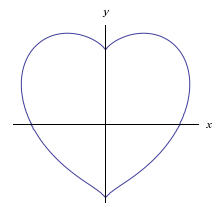
Mathematical valentine

This curve was described by Taubin in 1993.


(x2 + (9/4)y2 + z2 – 1)3x2z3 – (9/80)y2z3 = 0

Though I prefer the 2 dimensional form


(x2 + y2 – 1)3x2y3 = 0

Source

Hat tip: ropata

Thursday, 27 May 2010

Tax cuts for the rich

The New Zealand government budget for the coming year was released recently. Included was some tax restructuring which was anticipated and I have posted my thoughts here. Sales tax was increased and income tax was decreased. All incomes get some tax break. As typical, comments were made by some groups about those on higher incomes getting the better deal. Comments like this may reflect envy, or may be by those who perceive they struggle on their income; nevertheless it still reflects underlying innumeracy (or perhaps it is polemical for those with extreme Marxist views).

Here is the personal income tax structure currently and as it will become in October.

Gross income Old tax rate New Tax rate
0–14000 12.5% 10.5%
14000–48000 21% 17.5%
48000–70000 33% 30%
70000+ 38% 33%

It can be seen that both systems have a progressive tax structure. That is those on higher incomes not only pay more tax by virtue of the fact that tax is a percentage of income, they pay even more because they also pay a higher rate. Because tax is a rate, tax cuts, whether they be an absolute ratio (say 1% for each bracket) or a proportionate ratio (say 5% reduction on the rate), will always have a larger effect on higher incomes. Below is various incomes with the effect of the various taxes. Accident levy is excluded.

Old New
Gross Tax Net Tax Net Difference
5000 625 4375 525 4475 100
10000 1250 8750 1050 8950 200
25000 4060 20940 3395 21605 665
50000 9550 40450 8020 41980 1530
100000 27550 72450 23920 76080 3630

Looking at this table it is clear that even if the $0–14000 tax rate was abolished, i.e. set to 0%, those on higher incomes would still gain an advantage. This is because their tax break is greater than what the lower incomes even pay in tax.

The comment "tax cuts for the rich" is nonsensical as any tax cut is going to affect those on higher incomes at least as much as those on lower incomes. What is worth noting however is how much those on higher incomes pay. A tax saving of $4000 may seem a lot to some people, but this is in the context of someone who is already paying $30000. It is also worth noting that a tax break is not a subsidy, it is allowing the taxpayer to keep more of his earned income.

Thursday, 29 April 2010

Mathematics and beauty

The journal Mathematica Intellgencia held a vote in 1988 on the most beautiful mathematical theorem. Unfortunately they only got 76 responses. They published the results in 1990. I concur with the top place which went to Euler's identity. I doubt a more classy, yet simple equation exists.

e + 1 = 0

Thursday, 4 February 2010

Hebrew and Greek numbering

In ancient Hebrew the letter glyphs doubled as numeral glyphs, the same symbol could be a letter or a number depending on the context. Written Hebrew did this several centuries before Christ. In Hebrew the glyphs for the numbers 400–900 are final forms (the alternate shape of letters when they are the last letter of a word) and I am uncertain how old they are, or if paleo-Hebrew had glyphs for higher numbers. The higher hundreds can be written as a combination of the lower hundreds glyphs.

Greek used a similar system called the Milesian (or Ionian) system which replaced the earlier Attic system. The Attic system was somewhat similar to the Roman system. Greek uses 3 glyphs that had become obsolete at the time it was used to allow numbering to 900; though the position of fau (Ϝ) leaves one curious as to whether it may still have been in use at the time the system was invented/ copied.

Below are the Hebrew and Greek glyphs for the corresponding numbers. The lower case Greek was non-existent at the time of the New Testament.

Hebrew Glyph Number Greek Glyph
א 1Α α
ב 2Β β
ג3Γ γ
ד4Δ δ
ה 5Ε ε
ו 6Ϝ ϝ
ז 7Ζ ζ
ח 8Η η
ט 9Θ θ
י 10Ι ι
כ, ך20Κ κ
ל 30Λ λ
מ, ם 40Μ μ
נ, ן 50Ν ν
ס 60Ξ ξ
ע 70Ο ο
פ, ף 80Π π
צ, ץ 90Ϙ ϙ
ק 100Ρ ρ
ר 200Σ σ
ש 300Τ τ
ת 400Υ υ
ך 500Φ φ
ם 600Χ χ
ן700Ψ ψ
ף 800Ω ω
ץ 900Ͳ ͳ

Thus 23 is written ΚΓ, and 799 is ΨϘΘ.

Gematria is the association of words with numbers. The development of a word to number correspondence is understandable because the twofold sense of the glyphs. Every word has an associated number that is obtained by adding up the values of the glyphs read as numbers. For example the word king melek (מלך) is calculated as 40 + 30 + 20 = 90 (assuming 20 rather than 500 for kaph). David (דוד) is 4 + 6 + 4 = 14. This may be why Matthew included groups of 14 in his genealogy of Jesus.

Labels

abortion (8) absurdity (1) abuse (1) accountability (2) accusation (1) adultery (1) advice (1) afterlife (6) aid (3) alcohol (1) alphabet (2) analogy (5) analysis (1) anatomy (1) angels (1) animals (10) apologetics (47) apostasy (4) apostles (1) archaeology (23) architecture (1) Ark (1) Assyriology (12) astronomy (5) atheism (14) audio (1) authority (4) authorship (12) aviation (1) Babel (1) baptism (1) beauty (1) behaviour (4) bias (6) Bible (41) biography (4) biology (5) bitterness (1) blasphemy (2) blogging (12) blood (3) books (2) brain (1) browser (1) bureaucracy (3) business (5) calendar (7) cannibalism (2) capitalism (3) carnivory (2) cartography (1) censorship (1) census (2) character (2) charities (1) children (14) Christmas (4) Christology (8) chronology (54) church (4) civility (2) clarity (5) Classics (2) classification (1) climate change (39) coercion (1) community (3) conscience (1) contentment (1) context (2) conversion (3) copyright (5) covenant (1) coveting (1) creation (5) creationism (39) criminals (8) critique (2) crucifixion (14) Crusades (1) culture (4) currency (1) death (5) debate (2) deception (2) definition (16) deluge (9) demons (3) depravity (6) design (9) determinism (27) discernment (4) disciple (1) discipline (2) discrepancies (3) divinity (1) divorce (1) doctrine (4) duty (3) Easter (11) ecology (3) economics (28) education (10) efficiency (2) Egyptology (10) elect (2) emotion (2) enemy (1) energy (6) environment (4) epistles (2) eschatology (6) ethics (36) ethnicity (5) Eucharist (1) eulogy (1) evangelism (2) evil (9) evolution (13) examination (1) exegesis (22) Exodus (1) faith (22) faithfulness (1) fame (1) family (5) fatherhood (2) feminism (1) food (3) foreknowledge (4) forgiveness (4) formatting (2) fraud (1) freewill (29) fruitfulness (1) gematria (4) gender (5) genealogy (11) genetics (6) geography (3) geology (2) globalism (2) glory (6) goodness (3) gospel (4) government (18) grace (9) gratitude (2) Greek (4) happiness (2) healing (1) health (7) heaven (1) Hebrew (4) hell (2) hermeneutics (4) history (24) hoax (5) holiday (5) holiness (5) Holy Spirit (3) honour (1) housing (1) humour (36) hypocrisy (1) ice-age (2) idolatry (4) ignorance (1) image (1) inbox (2) inerrancy (17) infinity (1) information (11) infrastructure (2) insight (2) inspiration (1) integrity (1) intelligence (4) interests (1) internet (3) interpretation (87) interview (1) Islam (4) judgment (20) justice (25) karma (1) kingdom of God (12) kings (1) knowledge (15) language (3) lapsology (7) law (21) leadership (2) libertarianism (12) life (3) linguistics (13) literacy (2) literature (21) logic (33) love (3) lyrics (9) manuscripts (12) marriage (21) martyrdom (2) mathematics (10) matter (4) measurement (1) media (3) medicine (11) memes (1) mercy (4) Messiah (6) miracles (4) mission (1) monotheism (2) moon (1) murder (5) names (1) nativity (7) natural disaster (1) naval (1) numeracy (1) oceanography (1) offence (1) orthodoxy (3) orthopraxy (4) outline (1) paganism (2) palaeontology (4) paleography (1) parable (1) parenting (2) Passover (2) patience (1) peer review (1) peeves (1) perfectionism (2) persecution (2) perseverance (1) pharaohs (5) philanthropy (1) philosophy (34) photography (2) physics (18) physiology (1) plants (3) poetry (2) poison (1) policing (1) politics (31) poverty (9) prayer (2) pride (2) priest (3) priesthood (2) prison (2) privacy (1) productivity (2) progress (1) property (1) prophecy (7) proverb (1) providence (1) quiz (8) quotes (637) rebellion (1) redemption (1) reformation (1) religion (2) repentance (1) requests (1) research (1) resentment (1) resurrection (5) revelation (1) review (4) revival (1) revolution (1) rewards (2) rhetoric (4) sacrifice (4) salt (1) salvation (30) science (44) self-interest (1) selfishness (1) sermon (1) sexuality (20) shame (1) sin (16) sincerity (1) slander (1) slavery (5) socialism (4) sodomy (1) software (4) solar (1) song (2) sovereignty (15) space (1) sport (1) standards (6) statistics (13) stewardship (5) sublime (1) submission (5) subsistence (1) suffering (5) sun (1) survey (1) symbolism (1) tax (3) technology (12) temple (1) testimony (5) theft (2) toledoth (2) trade (3) traffic (1) tragedy (1) translation (19) transport (1) Trinity (2) truth (27) typing (1) typography (1) vegetarianism (2) vice (2) video (10) virtue (1) warfare (7) water (2) wealth (9) weird (6) willpower (4) wisdom (4) witness (1) work (10) worldview (4)