Showing posts with label software. Show all posts

Sunday, 20 February 2011

Electronic book software

I downloaded the Kindle Reading App for my computer and phone. I may read a few books on it. But I was interested in what is available for reading books in other formats. It seems that epub is the default and open standard for publishing electronic books.

Here is a nice review of various electronic readers.

I have installed Calibre which, amongst other features, allows you to convert a pdf to epub. It is not really designed as a reader but does fine. I have also installed the EPUBReader plugin for Firefox, but have yet to try it.

Wednesday, 24 November 2010

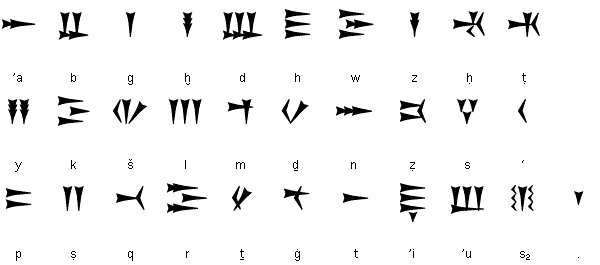
Computer software deciphers Ugaritic

Programmers have used statistical techniques to correlate Ugaritic and Hebrew alphabets as well as forms of words which they assume are somewhat parallel in related languages in order to decipher Ugaritic.
To duplicate the “intuition” that Robinson believed would elude computers, the researchers’ software makes several assumptions. The first is that the language being deciphered is closely related to some other language: In the case of Ugaritic, the researchers chose Hebrew. The next is that there’s a systematic way to map the alphabet of one language on to the alphabet of the other, and that correlated symbols will occur with similar frequencies in the two languages.

The system makes a similar assumption at the level of the word: The languages should have at least some cognates, or words with shared roots, like main and mano in French and Spanish, or homme and hombre. And finally, the system assumes a similar mapping for parts of words. A word like “overloading,” for instance, has both a prefix — “over” — and a suffix — “ing.” The system would anticipate that other words in the language will feature the prefix “over” or the suffix “ing” or both, and that a cognate of “overloading” in another language — say, “surchargeant” in French — would have a similar three-part structure.

The system plays these different levels of correspondence off of each other. It might begin, for instance, with a few competing hypotheses for alphabetical mappings, based entirely on symbol frequency — mapping symbols that occur frequently in one language onto those that occur frequently in the other. Using a type of probabilistic modeling common in artificial-intelligence research, it would then determine which of those mappings seems to have identified a set of consistent suffixes and prefixes. On that basis, it could look for correspondences at the level of the word, and those, in turn, could help it refine its alphabetical mapping. “We iterate through the data hundreds of times, thousands of times,” says Snyder, “and each time, our guesses have higher probability, because we’re actually coming closer to a solution where we get more consistency.” Finally, the system arrives at a point where altering its mappings no longer improves consistency.
Ugaritic was treated as unknown and the resultant translation turned out to be reasonably accurate.

This is beneficial for languages that are related, that is both are derived from a common source. It does not seem to be of use if we discovered a language unrelated to any known ones (unlikely). But it could help with increasing deciphering speed in poorly characterised languages.
“Each language has its own challenges,” Barzilay agrees. “Most likely, a successful decipherment would require one to adjust the method for the peculiarities of a language.” But, she points out, the decipherment of Ugaritic took years and relied on some happy coincidences — such as the discovery of an axe that had the word “axe” written on it in Ugaritic. “The output of our system would have made the process orders of magnitude shorter,” she says.

Indeed, Snyder and Barzilay don’t suppose that a system like the one they designed with Knight would ever replace human decipherers. “But it is a powerful tool that can aid the human decipherment process,” Barzilay says. Moreover, a variation of it could also help expand the versatility of translation software. 

Wednesday, 9 June 2010

Gapminder: Resource to compare countries

I have recently become aware of an interesting Swedish site called Gapminder. They have aggregated a large amount of statistics and allow you to plot them in a variety of ways. It covers health, income, disease and mortality, and several other parameters.

What I found of interest was their income and life expectancy graphs on Gapminder World. The basic frame is graph with a variety of options.


Life expectancy is on the left. It is a linear scale, though this can switched to a log scale. Income is on the bottom defaulting to a log scale (adjustable to linear). And the country size is plotted according to population. This can be adjusted to a fixed size, or a host of other variable such as aid received, education, energy use.

The year can be adjusted, or you can watch the changes unfold over the last 200 years. Countries can be highlighted for comparison.


And you can track changes of several countries over time.


What is of some interest is that life expectancy increased before income in many of the countries. I also found it interesting to note the slow economic progress or even regress of countries with poor governance compared to reasonably rapid gains in countries where there is rule of law and economic freedom. Compare Zimbabwe to Botswana and note the rise of Singapore and Hong Kong, neither of which have many natural resources, or even land or water.

Of course one is limited to the accuracy of the data, data from some countries is far more accurate than others.

Thursday, 31 December 2009

Importing Haloscan comments to Wordpress

As I previously mentioned, I have imported my Haloscan comments to a WordPress blog. I have no intention of switching from Blogger to WordPress at this stage, but this is the best I can do currently to retain online access to my old comments.

As I have been asked how this was done I will provide a brief outline here with the links to the pages I referenced. It is not particularly straightforward and I did this with the assistance of stratman.

Haloscan has been purchased by JS-Kit. They initially offered to transfer comments to an upgradeable free account. I understand that this commenting system is integrated into Blogger which suggests comments would have been transferred back to Blogger's commenting system. This was not available until one was notified of the transfer, by which stage it was Echo commenting which was a paid system. Not too unreasonable I guess, but given they can possibly insert the comments into Blogger that would have been a nice option.

My steps

I downloaded comments from Haloscan. You should do this first, and probably do it anyway in case of future need. Comments download as an xml file which you can view in Notepad. Blogger does not recognise the comments in this particular xml format, though the comments are indexed by the blogpost code determined by Blogger.

I needed to set up WordPress blogging software. WordPress develop free blog software which is very versatile. The software needs to be uploaded to a webhoster which I don't have. They also have their software on their own webhoster conveniently (or confusingly) called Wordpress.com. This is less versatile and is insufficient for the import.

Not having a webhoster I needed to host the software on my computer by having it act as a server. I downloaded WampServer which is open source software located at SourceForge.

I installed WampServer following this guide. Although I did not create virtual hosts; the default is a single localhost. And be careful about creating a password. You probably do not need one. If you create a password the file you need to modify (config.inc.php) is not in the www\phpmyadmin\ directory that it must have been in the 2005 version of WampServer. It is currently located in the apps\phpmyadmin3.2.0.1\ directory.

WordPress downloads as a zip file. After unpacking, the files can be copied into the www/ directory. Alternatively you can follow these directions.

WordPress blogs can be viewed and modified from within a browser. It is reasonably straightforward but more details here. I went to Tools/Import and imported posts (and old, pre-Haloscan comments) directly from Blogger. You need to give WampServer/ Wordpress permission from Blogger to do this. Even with permission I got an error. Work around was to open the php.ini file and find the line
;extension=php_openssl.dll
The semicolon (;) indicates this is a comment. Decomment by removing the semicolon and save the file. Reboot WampServer and WordPress can import directly from Blogger. Alternatively you can export the file from Blogger then import to WordPress.

Next I installed a WordPress plugin to import Haloscan comments. Essentially Blogger uses unique numeric codes for blog authors and blog posts. Haloscan uses the same blogpost codes for comments. Blogger codes are lost on the import to WordPress. The plugins identify the blogpost codes and attach the Haloscan comments to the correct post. Here are the pluggins and instructions for importing the Haloscan comments. They worked fine other than adding > to the beginning of post titles and the first paragraph of the post body. Because of timeouts I set the thread identification pluggin to only grab 10 posts per time.

There is some development code to import WordPress to Blogger. It involves installing Python, and apparently does not keep the comment dates intact, so I have not used that. Thus I do not have my old comments in Blogger. I have a WordPress blog which I uploaded the posts and comments to, which will have to suffice. It is unlikely people other than me will use it. But perhaps this post may be helpful to those who use WordPress rather than Blogger.

Labels

abortion (8) absurdity (1) abuse (1) accountability (2) accusation (1) adultery (1) advice (1) afterlife (6) aid (3) alcohol (1) alphabet (2) analogy (5) analysis (1) anatomy (1) angels (1) animals (10) apologetics (47) apostasy (4) apostles (1) archaeology (23) architecture (1) Ark (1) Assyriology (12) astronomy (5) atheism (14) audio (1) authority (4) authorship (12) aviation (1) Babel (1) baptism (1) beauty (1) behaviour (4) bias (6) Bible (41) biography (4) biology (5) bitterness (1) blasphemy (2) blogging (12) blood (3) books (2) brain (1) browser (1) bureaucracy (3) business (5) calendar (7) cannibalism (2) capitalism (3) carnivory (2) cartography (1) censorship (1) census (2) character (2) charities (1) children (14) Christmas (4) Christology (8) chronology (54) church (4) civility (2) clarity (5) Classics (2) classification (1) climate change (39) coercion (1) community (3) conscience (1) contentment (1) context (2) conversion (3) copyright (5) covenant (1) coveting (1) creation (5) creationism (39) criminals (8) critique (2) crucifixion (14) Crusades (1) culture (4) currency (1) death (5) debate (2) deception (2) definition (16) deluge (9) demons (3) depravity (6) design (9) determinism (27) discernment (4) disciple (1) discipline (2) discrepancies (3) divinity (1) divorce (1) doctrine (4) duty (3) Easter (11) ecology (3) economics (28) education (10) efficiency (2) Egyptology (10) elect (2) emotion (2) enemy (1) energy (6) environment (4) epistles (2) eschatology (6) ethics (36) ethnicity (5) Eucharist (1) eulogy (1) evangelism (2) evil (9) evolution (13) examination (1) exegesis (22) Exodus (1) faith (22) faithfulness (1) fame (1) family (5) fatherhood (2) feminism (1) food (3) foreknowledge (4) forgiveness (4) formatting (2) fraud (1) freewill (29) fruitfulness (1) gematria (4) gender (5) genealogy (11) genetics (6) geography (3) geology (2) globalism (2) glory (6) goodness (3) gospel (4) government (18) grace (9) gratitude (2) Greek (4) happiness (2) healing (1) health (7) heaven (1) Hebrew (4) hell (2) hermeneutics (4) history (24) hoax (5) holiday (5) holiness (5) Holy Spirit (3) honour (1) housing (1) humour (36) hypocrisy (1) ice-age (2) idolatry (4) ignorance (1) image (1) inbox (2) inerrancy (17) infinity (1) information (11) infrastructure (2) insight (2) inspiration (1) integrity (1) intelligence (4) interests (1) internet (3) interpretation (87) interview (1) Islam (4) judgment (20) justice (25) karma (1) kingdom of God (12) kings (1) knowledge (15) language (3) lapsology (7) law (21) leadership (2) libertarianism (12) life (3) linguistics (13) literacy (2) literature (21) logic (33) love (3) lyrics (9) manuscripts (12) marriage (21) martyrdom (2) mathematics (10) matter (4) measurement (1) media (3) medicine (11) memes (1) mercy (4) Messiah (6) miracles (4) mission (1) monotheism (2) moon (1) murder (5) names (1) nativity (7) natural disaster (1) naval (1) numeracy (1) oceanography (1) offence (1) orthodoxy (3) orthopraxy (4) outline (1) paganism (2) palaeontology (4) paleography (1) parable (1) parenting (2) Passover (2) patience (1) peer review (1) peeves (1) perfectionism (2) persecution (2) perseverance (1) pharaohs (5) philanthropy (1) philosophy (34) photography (2) physics (18) physiology (1) plants (3) poetry (2) poison (1) policing (1) politics (31) poverty (9) prayer (2) pride (2) priest (3) priesthood (2) prison (2) privacy (1) productivity (2) progress (1) property (1) prophecy (7) proverb (1) providence (1) quiz (8) quotes (637) rebellion (1) redemption (1) reformation (1) religion (2) repentance (1) requests (1) research (1) resentment (1) resurrection (5) revelation (1) review (4) revival (1) revolution (1) rewards (2) rhetoric (4) sacrifice (4) salt (1) salvation (30) science (44) self-interest (1) selfishness (1) sermon (1) sexuality (20) shame (1) sin (16) sincerity (1) slander (1) slavery (5) socialism (4) sodomy (1) software (4) solar (1) song (2) sovereignty (15) space (1) sport (1) standards (6) statistics (13) stewardship (5) sublime (1) submission (5) subsistence (1) suffering (5) sun (1) survey (1) symbolism (1) tax (3) technology (12) temple (1) testimony (5) theft (2) toledoth (2) trade (3) traffic (1) tragedy (1) translation (19) transport (1) Trinity (2) truth (27) typing (1) typography (1) vegetarianism (2) vice (2) video (10) virtue (1) warfare (7) water (2) wealth (9) weird (6) willpower (4) wisdom (4) witness (1) work (10) worldview (4)